iGaming Affiliate Software: The Operator's Guide for 2026

The right iGaming affiliate software tracks every click, conversion, and commission payment across your affiliate network in real time, supports CPA, revenue share, and hybrid commission structures simultaneously, and integrates cleanly with your casino platform without a separate development project. Most operators get this decision wrong because they make it after choosing a platform, then discover their platform already includes it - or that their platform cannot integrate with the tool they picked. This guide covers the full landscape: in-house versus third-party, the main tools compared, commission model requirements, and the platforms that include affiliate tracking in the base price so you pay nothing extra.
- Why affiliate software is the second decision after your platform
- In-house affiliate tracking vs third-party software
- The main iGaming affiliate software options compared
- Find your affiliate software fit
- Commission models: what your software must support
- Platforms with native affiliate tracking
- What operators get wrong at integration
Why affiliate software is the second decision after your platform
Player acquisition in the iGaming space is dominated by affiliate marketing. For most white label casino operators, affiliates - SEO publishers, review sites, bonus aggregators, and influencers - drive between 40 and 70 percent of new depositing players. The commission cost is high, typically 20 to 40 percent of net gaming revenue per referred player, but the acquisition model is performance-based: you only pay when a player deposits and plays.
What makes affiliate software a foundational decision, not an afterthought, is timing. The affiliate software you choose determines which commission structures you can offer, which affiliates will work with you, and how clearly you can see which traffic sources are actually profitable. An operator who launches without functional affiliate tracking is flying blind: they are paying commissions on reported figures they cannot verify and cannot see which of their affiliates are sending high-value players versus bonus abusers.
The platform decision comes first because the affiliate software must integrate with the platform’s player database and GGR reporting in real time. An affiliate software tool that cannot pull live GGR data from your platform cannot calculate revenue share commissions correctly. This integration point is where most post-launch affiliate software problems originate.
For operators still at the platform selection stage, the guide to choosing an iGaming platform provider covers the platform decision in full. For operators already live and looking to upgrade their affiliate setup, this guide starts at the software comparison.
The total cost of affiliate software over three years of operation is material. A third-party tool at $1,000 per month costs $36,000 over three years. A platform with native affiliate tracking included in the base GGR share costs nothing extra. That $36,000 difference funds a meaningful portion of first-year player acquisition spend.
In-house affiliate tracking vs third-party software
The first decision is not which affiliate tool to use. It is whether to use a dedicated third-party tool at all, or rely on the affiliate tracking built into your casino platform.
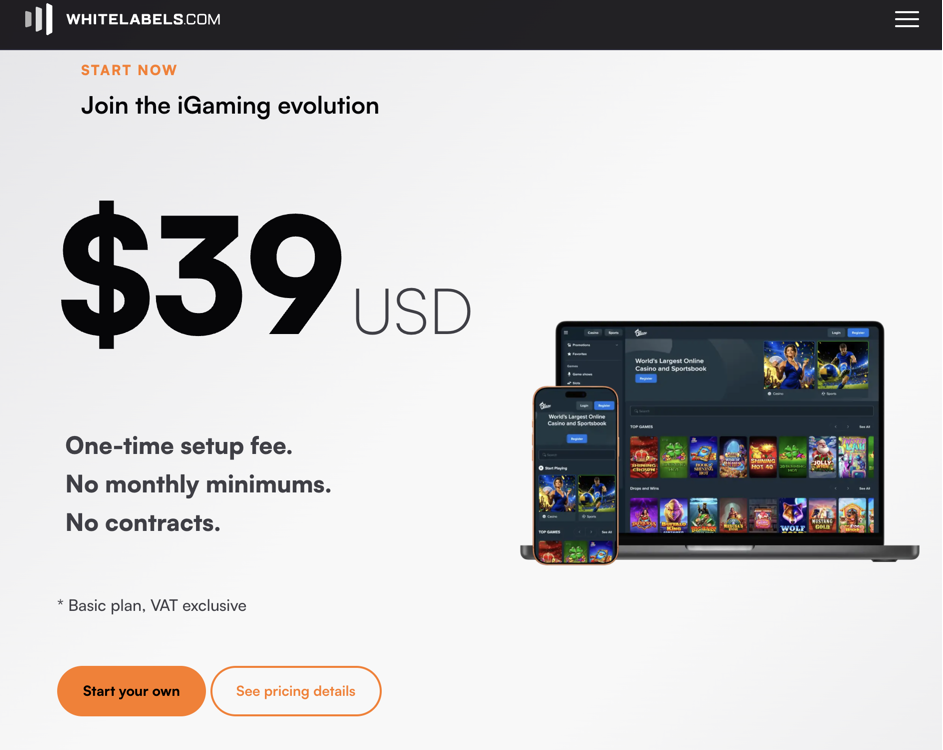
In-house affiliate tracking - software built and maintained by the platform provider - is included natively in several white label platforms. Whitelabels.com includes affiliate tracking in the $99 setup fee. SOFTSWISS offers its own affiliate management product called Affilka as part of its platform ecosystem. When a platform includes native tracking, the integration is seamless by design: the platform writes GGR data directly to the affiliate software with no API bridge required, no data sync delays, and no reconciliation overhead.
Third-party affiliate software operates as a separate product that connects to the platform via API. The main players are MyAffiliates, Income Access (acquired by Paysafe), and Post Affiliate Pro. These tools offer broader feature sets than most native solutions and work across multiple platforms simultaneously, which matters for operators running more than one brand. The trade-off is integration complexity, a separate monthly cost, and a data sync that is never truly real-time.
The rule of thumb: if your platform includes native affiliate tracking that covers CPA, revenue share, and hybrid commissions with real-time reporting, use it. The feature parity between native tools in 2026 and the mid-tier third-party tools is close enough that the integration simplicity wins. Switch to a dedicated third-party tool when you are running multiple brands on different platforms, when your affiliate network is large enough that you need advanced segmentation and reporting features, or when you need compliance-grade audit trails for a regulated market.
The main iGaming affiliate software options compared
{{infographic:affiliate-comparison}}
The five tools above cover the full operator range from solo white label launch to enterprise multi-brand operation. The right choice depends on your platform, your affiliate network size, and whether you need multi-brand support.
Whitelabels.com native tracking is the starting point for any operator on that platform. Affiliate commissions, player tracking, and GGR reporting are all handled within the platform. There is no additional cost. For affiliates, the experience is a standard dashboard with real-time stats and commission reports. For operators, the setup takes minutes rather than a development sprint. The limitation is that it only works within the Whitelabels.com ecosystem.
Affilka by SOFTSWISS is the most mature native affiliate solution in the white label space. Built for operators on the SOFTSWISS platform, it supports multi-brand management, complex commission structures, sub-affiliate networks, and compliance reporting for MGA-regulated operators. The price point starts at approximately $1,500 per month for smaller operations and scales with network size. SOFTSWISS operators who choose a third-party tool over Affilka are paying twice for overlapping functionality.
MyAffiliates is the most widely adopted independent affiliate software in iGaming. It works with any platform that has an API and supports CPA, revenue share, hybrid, and tiered commission models. The interface is dated compared to newer entrants but the feature depth is strong. Pricing ranges from $500 to $2,000 per month depending on active affiliate count and brand volume. It is the default choice for mid-market operators running one or two brands on platforms without native tracking.
Income Access (now part of Paysafe) targets enterprise operators who need compliance-grade reporting, multi-jurisdiction support, and a dedicated account management team. The cost reflects the positioning - budgets typically start above $2,000 per month. For operators in strictly regulated markets where affiliate compliance documentation is audited, Income Access provides the audit trail infrastructure that lighter tools do not.
Post Affiliate Pro is the budget entry point. At $97 to $477 per month depending on plan, it covers the basics: CPA tracking, revenue share calculation, affiliate dashboards, and payment processing. The iGaming-specific features are limited compared to MyAffiliates or Affilka, but for an operator with a small network of five to fifteen affiliates, the gap does not matter much in practice.
Find your affiliate software fit
{{widget:affiliate-picker}}
The result above routes to a software category. Match the category to the specific tools in the comparison table - native first if your platform supports it, third-party only when native falls short of your specific requirements.
Commission models: what your software must support
The commission model is the single most important technical requirement for affiliate software. iGaming affiliates operate across three primary models, and most serious affiliate networks will work with operators who cannot support all three.
Revenue share (RevShare) pays the affiliate a percentage of the net gaming revenue generated by referred players for the lifetime of those players. Typical rates run from 20 to 40 percent of NGR. RevShare is the preferred model for high-quality affiliate publishers who build content assets - they want long-term income from players they send, not a one-time payment. The calculation requires the software to track every player by referring affiliate, calculate NGR net of bonuses and chargebacks, and apply the correct rate tier. This is where cheap or poorly integrated tools fail: if the GGR data is not flowing correctly from the platform, the RevShare calculation is wrong.
CPA (Cost Per Acquisition) pays a fixed fee when a referred player meets a qualifying condition - typically a first deposit above a minimum threshold. Rates range from $50 to $300 per qualifying player depending on market and operator. CPA is preferred by media buyers and paid traffic affiliates who need predictable unit economics. The software must track the qualifying event accurately and apply it within a defined attribution window.
Hybrid combines a lower RevShare rate with a smaller CPA payment. It is the compromise that works for affiliates who want both immediate cash flow and long-term income. Not all software tools support hybrid structures elegantly - some require manual workarounds that create reconciliation headaches.
Beyond these three, operators in regulated markets should check whether the software supports negative carryover policies. Negative carryover means that if an affiliate’s players win big in one month, producing negative NGR, that loss carries into future months before the affiliate earns RevShare again. Without negative carryover, affiliates are protected from downswings and the operator absorbs all variance. The GGR fee model breakdown covers how these structures interact with platform costs.
According to the UK Gambling Commission’s guidance on affiliate marketing, operators in regulated markets are fully responsible for the marketing activity of their affiliates, including commission structures and promotional materials. This means your affiliate software must produce auditable records of commission calculations, payment history, and player attribution - not just dashboards.
Platforms with native affiliate tracking
The most cost-efficient affiliate setup is one where the platform handles it. These are the platforms on the main ranking that include affiliate tracking natively without requiring a third-party tool.
Whitelabels.com includes affiliate tracking in the base $99 setup. Operators can register affiliates, set commission structures, issue tracking links, and view real-time player and revenue reports all within the platform. For operators who are affiliates themselves converting their own traffic to a casino brand, this is the most direct path - the affiliate tracking and the platform are the same product. The Whitelabels.com platform review covers the affiliate module in more detail.
SOFTSWISS offers Affilka as a native product within the SOFTSWISS ecosystem. Unlike Whitelabels.com, Affilka is a separate product with its own pricing rather than included in the platform GGR share. The advantage is the depth of the product and its MGA compliance capabilities for operators in regulated markets.
Slotegrator includes a basic affiliate module in its platform package. The functionality covers standard CPA and RevShare structures but lacks the advanced reporting features of Affilka or MyAffiliates.
Platforms that do not include native affiliate tracking - GammaStack, BetConstruct, EveryMatrix, and White Hat Gaming at the standard tier - require a third-party integration. The guide to platforms for affiliate-driven brands covers how the main platforms compare specifically for operators whose growth model is affiliate-first.
For operators who have not yet chosen a platform, the affiliate tracking question should be part of the platform selection conversation, not an afterthought. The cost of a third-party affiliate tool over two years often exceeds the setup fee difference between two platform options. Factor it into the all-in cost comparison before committing.
What operators get wrong at integration
Most affiliate software problems appear in the first month of operation, when the first commission statements go out and the numbers do not match what affiliates expect. The root cause is almost always one of four integration failures.
GGR data sync lag. Third-party affiliate tools pull GGR data from the platform on a schedule - hourly, daily, or in some cases weekly. Affiliates who check their dashboards in real time see stale numbers. When commission statements are produced from data that has not fully synced, the figures are wrong. Fix: negotiate a real-time or sub-hourly sync SLA with the software vendor before going live.
Bonus deduction mismatch. NGR is GGR minus bonuses paid to players. How bonuses are defined and deducted varies between platforms and affiliate tools. If the platform and the affiliate software do not agree on what counts as a deductible bonus, the NGR figure they each produce will differ. This is the most common source of affiliate disputes. Fix: define bonus deduction rules in writing at integration, not after the first discrepancy.
Attribution window conflicts. CPA commissions are paid when a player qualifies within an attribution window - typically 30 or 60 days from the first click. If the platform and the affiliate software track first-click timestamps differently due to time zone settings or cookie handling, the same player can appear as qualified in one system and not in the other. Fix: test attribution with real test player accounts before launching the affiliate program.
Missing sub-affiliate tracking. Operators who work with affiliate networks rather than direct publishers need sub-affiliate tracking - the ability to track which publisher within the network sent a specific player. Many basic tools do not support this natively. Fix: confirm sub-affiliate support explicitly before signing a software contract.
Getting these four points right before the first commission cycle runs is the difference between a smooth affiliate program launch and weeks of manual reconciliation that erodes affiliate trust before the relationship has started.
FAQ
What is the best iGaming affiliate software for a new casino operator?
For operators on Whitelabels.com, the native affiliate tracking included in the $99 setup is the right starting point. It covers the standard commission structures, runs in real time, and adds no extra cost. For operators on platforms without native tracking - GammaStack, BetConstruct, EveryMatrix - MyAffiliates is the most widely adopted independent option in the $500 to $2,000 per month range. Post Affiliate Pro covers the basics for operators with small networks on tight budgets. Affilka by SOFTSWISS is the strongest native solution but only works within the SOFTSWISS ecosystem.
How much does iGaming affiliate software cost?
Costs range from $0 (native tracking included in the platform, as with Whitelabels.com) to $2,000 or more per month for enterprise tools like Income Access. MyAffiliates runs $500 to $2,000 per month depending on active affiliate count. Post Affiliate Pro starts at $97 per month. Affilka by SOFTSWISS starts at approximately $1,500 per month. The total cost over three years is a material line item: a $1,000 per month tool costs $36,000 over that period. This should be factored into the platform cost comparison before choosing a platform.
What commission models do iGaming affiliates expect?
Most established iGaming affiliates expect revenue share as their primary model, with CPA available as an alternative for traffic that does not suit long-term RevShare deals. Hybrid structures - a small CPA upfront plus a lower RevShare rate - are standard for content publishers who want both immediate cash flow and long-term income. Tiered revenue share, where the RevShare rate increases as an affiliate sends more qualifying players, is common at larger networks. Your affiliate software must support all three without manual workarounds or the top-tier affiliate publishers will not work with you.
Can I run my affiliate program without dedicated software?
Technically yes, with manual tracking via spreadsheets and platform reporting exports. In practice, this only works for the first five to ten affiliates and breaks down quickly. Manual affiliate management creates payment delays, calculation errors, and a lack of self-service reporting for affiliates - all of which drive affiliate churn. The cost of even a basic tool like Post Affiliate Pro at $97 per month is justified from the third or fourth active affiliate onward. Below three affiliates, manual tracking is workable.
Does my affiliate software need to change as I scale?
Often yes. The tool that works for a network of ten affiliates on a single brand typically lacks the reporting depth, sub-affiliate tracking, and compliance documentation features needed at 100 affiliates across multiple brands. The right migration point is when affiliate commission reconciliation starts taking more than a few hours per month, when affiliates start asking for reporting features your tool cannot produce, or when you expand into a regulated market where compliance audit trails are mandatory. Plan the migration before you need it - switching affiliate software mid-operation requires re-issuing tracking links to every affiliate and risks attribution gaps during the transition.
About the Author

Founder, best-white-label-casinos.org
iGaming operator and B2B software evaluator with 20 years of experience launching and reviewing online casino platforms across MGA, Curaçao, and crypto-native environments. Ratings are based on cost transparency, feature depth, regulatory compliance, and operator support quality.
Looking for the best white label casino platform?
Compare 10 providers by cost, launch time, licensing support and game library. Independent editorial, no paid placements.
Compare All Platforms →Some links in this article may be affiliate links. best-white-label-casinos.org may earn a commission at no cost to you. This does not affect editorial independence. Read our terms.
← Previous
Whitelabels.com Review 2026: The $99 Platform Rewriting the Casino Industry
A deep-dive portrait of Whitelabels.com: pricing, templates, platform features, licensing, and how it stacks up against SOFTSWISS, BetConstruct, and SoftGamings. Based on live data scraped from their website.

Next →
Anjouan Gaming Licence: Cost, Requirements and How to Get One
The complete guide to the Anjouan gaming licence in 2026. Application cost, timeline, requirements, approved platforms, and how it compares to Curaçao and MGA.